
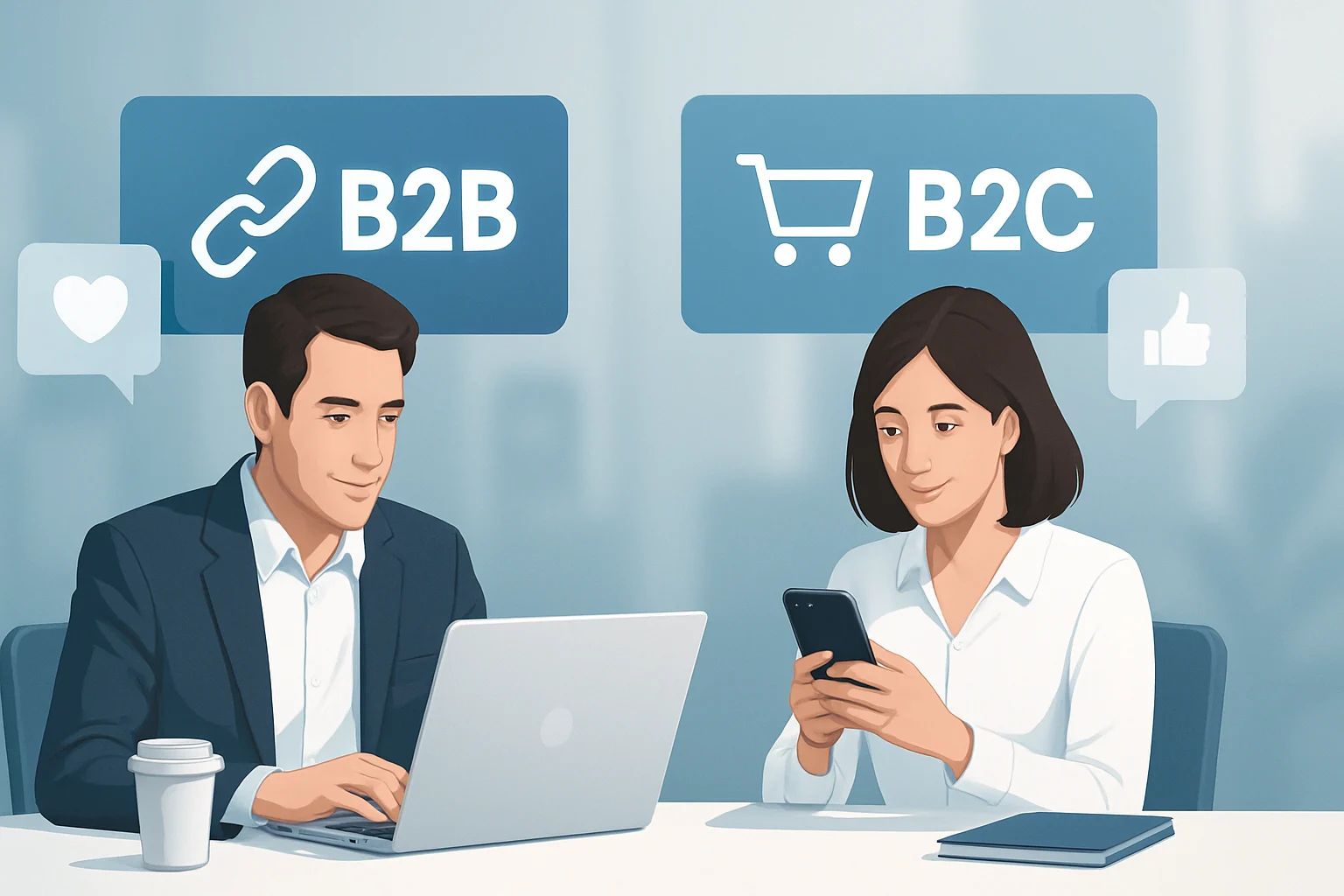
Are you leveraging social media effectively for your B2B or B2C strategy? Over 73% of marketers believe that their efforts through social media marketing have been “somewhat effective” or “very effective” (Source: HubSpot). Understanding the nuances between social media for B2B vs B2C is crucial for optimizing your approach and achieving your goals.
In this article, we’ll dissect the key differences and illuminate why they matter. From audience engagement strategies to content creation techniques, knowing how to tailor your social media efforts can lead to better lead generation, increased brand awareness, and ultimately, higher conversion rates.
Stay with us as we explore these distinctions and provide actionable recommendations that will empower your business to thrive in the competitive digital marketplace. By the end, you’ll have a clear understanding of the best practices that can set your strategy apart.
Key Takeaways
- Identify Your Audience: Clearly define whether your target market is B2B or B2C to tailor your messaging and platform selection effectively.
- Craft Relevant Content: Develop content that resonates with your audience; use informative and educational materials for B2B, and entertaining, visually appealing content for B2C.
- Adjust Your Engagement Strategy: Foster relationships and network-building in B2B, while creating interactive and emotional connections for B2C.
- Monitor Sales Cycle: Recognize the differences in sales cycles; prioritize relationship-building in B2B and leverage urgency for B2C sales.
What is Social Media for B2B and B2C?
Social media for B2B (Business-to-Business) and B2C (Business-to-Consumer) serves distinct purposes and employs different strategies tailored to their target audiences.
B2B social media focuses on fostering relationships and building networks among professionals and organizations. Platforms like LinkedIn are prominent in this space, facilitating connections that lead to partnerships, lead generation, and industry insights. Conversely, B2C social media emphasizes engaging individual consumers directly to drive sales and brand loyalty. Platforms such as Instagram and Facebook excel in creating visually appealing content that resonates with consumers on a personal level.
Understanding the difference between B2B and B2C social media is critical for businesses aiming to optimize their online presence. Each approach requires tailored content and engagement strategies that reflect the specific needs and behaviors of their target demographics.
Importance of Understanding the Difference
- Target Audience: B2B targets decision-makers within organizations, while B2C engages a broader consumer base.
- Content Type: B2B content is often informative and educational, whereas B2C content tends to be entertaining and emotionally driven.
- Sales Cycle: B2B transactions typically involve longer sales cycles with multiple stakeholders, while B2C sales can be impulsive and direct.
"Understanding your audience is key to crafting an effective social media strategy." – Marketing Expert
| Feature | B2B Social Media | B2C Social Media |
|---|---|---|
| Primary Platforms | LinkedIn, Twitter | Facebook, Instagram, TikTok |
| Content Focus | Industry insights, case studies | Product promotions, lifestyle content |
| Engagement Style | Professional networking | Community interaction, brand storytelling |
| Conversion Goals | Lead generation, partnerships | Sales, brand loyalty |
Key Takeaways
- Differentiate your strategy: Tailor your content to fit either B2B or B2C objectives.
- Choose the right platforms: Align your social media channels with your audience's preferences.
- Adapt your messaging: Create content that resonates with either business professionals or everyday consumers.
By recognizing these distinctions, businesses can create more effective social media campaigns that drive results and foster meaningful connections.
What Are the Key Differences Between B2B and B2C Social Media?
The distinction between B2B (Business-to-Business) and B2C (Business-to-Consumer) social media strategies fundamentally stems from their target audiences and the content types they utilize. Understanding these differences is crucial for tailoring effective marketing approaches.
Target Audience Variations
In B2B, the audience typically comprises professionals and decision-makers within organizations. They tend to seek out content that demonstrates expertise, reliability, and ROI (Return on Investment). Conversely, B2C targets individual consumers who are often motivated by emotional appeal, brand loyalty, and entertainment.
-
B2B Audience Characteristics:
- Focus on long-term relationships
- Decision-makers often require detailed information
- Engagement through professional networks like LinkedIn
-
B2C Audience Characteristics:
- Shorter sales cycle
- Driven by personal preference and trends
- Engagement through platforms like Instagram and TikTok
Content Types and Messaging Differences
The content shared on B2B and B2C platforms varies significantly, both in format and messaging style.
-
B2B Content Types:
- Whitepapers
- Case studies
- Webinars
- Industry reports
-
B2C Content Types:
- Promotional videos
- User-generated content
- Memes and entertainment-focused posts
- Influencer partnerships
"B2B brands should focus on providing value through educational content, while B2C brands thrive on creating emotional connections." – Marketing Expert
Concrete examples illustrate these differences. For instance, a software company may publish a detailed whitepaper on industry trends (B2B), while a fashion retailer might share a vibrant Instagram reel showcasing their latest collection (B2C).
In summary, understanding the key distinctions between B2B and B2C social media strategies allows businesses to tailor their content effectively, ensuring that it resonates with their target audience.
| Aspect | B2B | B2C |
|---|---|---|
| Audience | Professionals, decision-makers | General consumers |
| Engagement Platforms | LinkedIn, Twitter | Facebook, Instagram, TikTok |
| Content Focus | Educational, informative | Emotional, entertaining |
Actionable Checklist
- Define your target audience profile.
- Choose appropriate platforms for engagement.
- Tailor content types according to audience preferences.
How to Craft Effective B2B Social Media Strategies
Crafting effective B2B social media strategies involves a keen understanding of your target audience and selecting the right platforms to engage them.
Identifying your audience is the cornerstone of any successful strategy. Unlike B2C companies, which can target broad demographics, B2B brands must focus on specific industries, company sizes, and job roles. To assist in this process, consider these steps:
- Define Buyer Personas: Create detailed profiles of your ideal customers, including their pain points, decision-making processes, and preferred content types.
- Utilize Analytics Tools: Leverage platforms like LinkedIn Insights or Google Analytics to gather data on your audience's behavior and preferences.
- Engage with Existing Clients: Conduct surveys or interviews to understand what content resonates with your current client base.
Choosing the right platforms is equally important. While B2C companies often thrive on visually-driven platforms like Instagram and TikTok, B2B brands should focus on professional networks. Here’s a comparison of platforms suitable for B2B engagement:
| Platform | Best For | Key Features |
|---|---|---|
| Networking and lead generation | Professional content sharing, groups | |
| Real-time engagement | Short updates, industry news | |
| Community building | Groups, event promotion | |
| YouTube | Educational content | Tutorials, webinars |
"The right platform can amplify your message and connect you with decision-makers in your industry." – Marketing Strategist
For B2B social media success, consider these actionable items:
- Prioritize LinkedIn: With over 900 million members, LinkedIn is a powerful tool for networking and lead generation.
- Create Valuable Content: Focus on whitepapers, case studies, and thought leadership articles that appeal to your audience's professional interests.
- Engage Regularly: Consistent posting and interaction with followers can enhance brand loyalty and authority.
By tailoring your content strategy and platform choice to your unique B2B audience, you can significantly improve engagement and lead conversion rates.
How to Create Engaging B2C Social Media Campaigns
Creating engaging B2C social media campaigns requires a deep understanding of consumer behavior and effective use of visual content. This approach differs significantly from B2B strategies, as B2C marketing is often aimed at evoking emotions and driving immediate purchases.
Understanding Consumer Behavior
To craft successful B2C campaigns, brands must tap into the psychology of consumer behavior. Here are key factors to consider:
- Emotional Appeal: Consumers often make purchases based on emotions rather than logic. Crafting messages that resonate emotionally can lead to higher engagement and conversion rates.
- Trends and Influences: Staying updated on social media trends and understanding how influencers shape consumer preferences is crucial. According to a study, 49% of consumers depend on influencer recommendations when making purchasing decisions (Source: https://www.businessinsider.com).
Leveraging Visual Content
Visual content is a cornerstone of effective B2C marketing. Platforms like Instagram and TikTok thrive on visually appealing materials. Here's how to incorporate visual elements:
- Use High-Quality Images: Invest in professional photography to showcase products.
- Create Engaging Videos: Short, captivating videos can significantly increase engagement. Consider using formats like stories or reels to maintain viewer interest.
- Incorporate User-Generated Content: Encourage customers to share their experiences with your products. This not only boosts authenticity but also fosters community.
"Visual storytelling captivates audiences, making them more likely to connect with the brand, leading to higher conversion rates."
Here’s a quick checklist to enhance your B2C social media campaigns:
- Identify your target audience and tailor your content accordingly.
- Engage with followers through comments and messages.
- Monitor analytics to gauge what content performs best and adjust your strategy.
In summary, understanding consumer behavior and leveraging visual content are critical for creating effective B2C social media campaigns. By focusing on emotional connections and visually appealing materials, brands can drive engagement and increase sales. For more insights on consumer behavior, visit Psychology Today.
What Metrics Should You Use to Measure Success?
Understanding what metrics to use for measuring success in social media can drastically impact your B2B or B2C strategy. The key performance indicators (KPIs) differ significantly between these two models, reflecting their unique goals and audiences.
Key Performance Indicators for B2B: B2B companies often prioritize metrics that align with long-term relationships and lead generation. Here are some essential KPIs for B2B social media:
- Lead Generation: Track the number of leads generated from social media campaigns.
- Conversion Rate: Measure the percentage of leads that convert into paying customers.
- Engagement Rate: Analyze interactions such as comments, shares, and likes on posts.
- Website Traffic: Monitor the traffic driven to your site from social media platforms.
- Customer Acquisition Cost (CAC): Assess the total cost of acquiring a customer through social media efforts.
Key Performance Indicators for B2C: Conversely, B2C companies focus more on immediate sales and brand visibility. Important KPIs for B2C include:
- Sales Growth: Evaluate the increase in sales directly attributed to social media campaigns.
- Customer Retention Rate: Measure how well you retain customers over time through social interactions.
- Social Media Reach: Understand the total number of unique users who see your content.
- Brand Awareness: Track mentions and sentiment around your brand on social platforms.
- User-Generated Content: Monitor the volume and quality of content created by customers about your brand.
| B2B KPIs | B2C KPIs |
|---|---|
| Lead Generation | Sales Growth |
| Conversion Rate | Customer Retention Rate |
| Engagement Rate | Social Media Reach |
| Website Traffic | Brand Awareness |
| Customer Acquisition Cost (CAC) | User-Generated Content |
To illustrate, a B2B software company may focus on generating qualified leads through LinkedIn, aiming for a 10% conversion rate from their ad campaigns, while a B2C apparel brand may prioritize increasing their sales by 15% through targeted Instagram promotions.
"Choosing the right metrics is crucial; they must align with your business model to effectively measure success," advises social media strategist Jane Doe.
By understanding these metrics, businesses can tailor their social media strategies to ensure they are effectively meeting their goals.
What Are the Common Challenges in B2B vs B2C Social Media?
Navigating the nuances of social media in B2B and B2C environments presents distinct challenges that require tailored strategies.
For B2B companies, the complexities often stem from the longer sales cycles and the need for relationship-building. Here are some unique challenges faced by B2B marketers:
- Target Audience: B2B social media must engage niche audiences, often consisting of decision-makers and industry professionals. This requires a deep understanding of the audience’s pain points and decision-making processes.
- Content Complexity: B2B content tends to be more technical and requires an educational approach. Crafting compelling and informative posts that resonate with a specialized audience can be a significant hurdle.
- Measurement and ROI: Demonstrating the effectiveness of social media efforts in B2B can be challenging. Metrics may not translate directly to sales, complicating the assessment of ROI.
Conversely, B2C companies face their own set of challenges:
- High Competition: The B2C landscape is saturated, making it difficult to stand out. Brands must create innovative and engaging content to capture consumer attention among numerous options.
- Fast-Paced Trends: B2C marketers must stay ahead of rapidly changing trends and consumer preferences, often requiring quick adaptations to their strategies.
- Emotional Engagement: Unlike B2B, B2C marketing relies heavily on emotional connections. Creating content that evokes a strong emotional response is crucial but can be challenging to achieve consistently.
"The key to successful social media marketing lies in understanding the unique challenges of your audience, no matter the sector." – Marketing Expert
| Challenges | B2B | B2C |
|---|---|---|
| Audience Focus | Niche, decision-makers | Broad, diverse consumer base |
| Content Type | Technical, educational | Emotional, entertaining |
| Measurement | Complex ROI assessment | Direct sales correlation |
Key Challenges Summary for B2B vs. B2C
-
B2B Challenges:
- Engaging a specialized audience
- Creating complex content
- Measuring effectiveness and ROI
-
B2C Challenges:
- Standing out in a crowded market
- Keeping up with trends
- Building emotional connections
Understanding these challenges can help businesses tailor their social media strategies effectively, ensuring they meet their objectives in either the B2B or B2C landscape. For more insights into social media marketing strategies, consider exploring resources from HubSpot and Hootsuite.
What Future Trends Should You Watch?
The landscape of social media is continuously evolving, and businesses must remain agile to leverage new opportunities. Here are some emerging trends for both B2B and B2C social media that you should watch closely.
Emerging Trends in B2B Social Media
-
Video Content Dominance: With platforms like LinkedIn prioritizing video content, B2B companies are increasingly using webinars and live streams to showcase expertise. According to a survey by LinkedIn, 87% of video marketers reported that video increased their website traffic (Source: https://www.linkedin.com).
-
Personalization at Scale: B2B brands are leveraging data analytics to create personalized content experiences for their audience, fostering deeper connections. This trend is evident in the rise of account-based marketing strategies.
-
Community Building: B2B firms are focusing on creating niche communities around their products or services. These communities facilitate direct engagement and feedback, enhancing customer loyalty.
Emerging Trends in B2C Social Media
-
Augmented Reality (AR): Brands like IKEA are utilizing AR to enhance customer experiences, allowing consumers to visualize products in their own space before purchase.
-
Influencer Collaborations: Micro-influencers are gaining traction in B2C marketing, as they often yield higher engagement rates. Brands are increasingly investing in partnerships with influencers who resonate with specific demographics.
-
Sustainability and Ethical Branding: Consumers are becoming more socially conscious. Brands are using social media to promote their sustainability efforts, which can significantly influence purchasing decisions.
| Trend | B2B | B2C |
|---|---|---|
| Content Type | Video, Webinars | AR, Influencer Content |
| Engagement Strategy | Community Building | Ethical Branding |
| Personalization | Data-Driven Marketing | Targeted Ads |
“The future of B2B social media lies in building authentic relationships that drive engagement, not just transactions.” - Industry Expert
By integrating these trends into your social media strategy, you can position your business for future success. Keeping an eye on these developments will ensure you remain competitive in your market.
Conclusion
Understanding the distinct approaches of social media for B2B and B2C is crucial for maximizing your marketing efforts. Tailoring your strategies to meet the specific needs of your audience can significantly enhance engagement and conversion rates.
- Target Audience: B2B focuses on decision-makers, while B2C targets the general consumer.
- Content Style: B2B emphasizes informative, research-driven content, whereas B2C thrives on emotional and entertaining narratives.
- Platforms: LinkedIn is pivotal for B2B, while platforms like Instagram and Facebook are more effective for B2C engagement.
- Sales Cycle: B2B often involves longer sales cycles with multiple touchpoints, while B2C is geared towards quick transactions.
Recognizing these differences not only informs your social media strategy but also positions your brand to better connect with your audience, ultimately driving growth.
Start implementing these strategies today to leverage the full potential of social media for your business!
Take Your Content to the Next Level
Ready to transform your social media strategy? Socyally's AI-powered platform helps you tailor your content specifically for B2B or B2C audiences with ease. Create professional content in minutes, not hours.
Frequently Asked Questions
What is the best social media platform for B2B?
LinkedIn is widely considered the best social media platform for B2B marketing due to its professional focus and networking capabilities. It allows businesses to connect with decision-makers, share industry insights, and generate leads effectively.
How does B2C social media differ from B2B?
B2C social media focuses on engaging individual consumers, often using emotional appeals and lifestyle branding. In contrast, B2B social media emphasizes building relationships, providing value through educational content, and targeting decision-makers in businesses.
What types of content work best for B2B social media?
Educational content such as whitepapers, case studies, and industry reports tend to perform well in B2B social media. Additionally, webinars, infographics, and thought leadership articles can help establish authority and foster engagement among professionals.
How do you measure social media success for B2C?
Success for B2C social media can be measured through engagement metrics such as likes, shares, comments, and follower growth. Additionally, tracking conversions, sales, and brand awareness through analytics tools provides insights into the effectiveness of campaigns.
What are the top challenges for B2B marketers on social media?
B2B marketers often face challenges such as creating content that resonates with a niche audience and demonstrating ROI from social media efforts. Additionally, navigating algorithm changes and staying updated with platform features can complicate strategy execution.